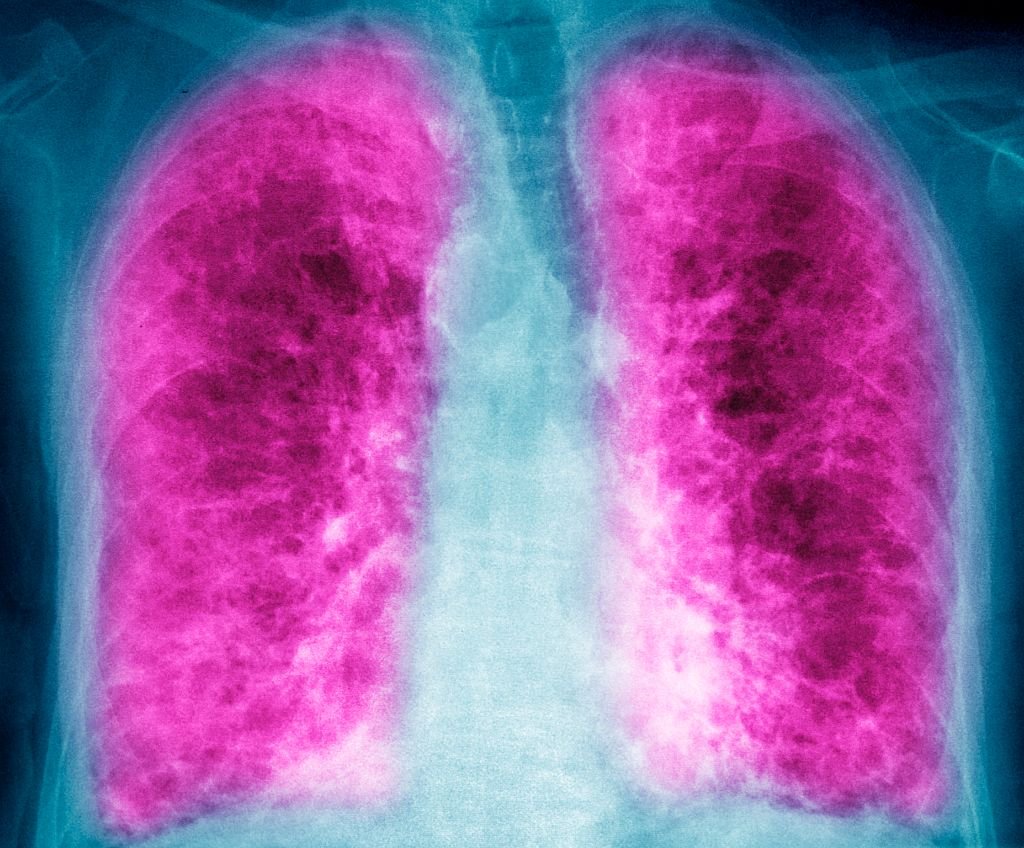
Avalyn Pharma is making strides in treating pulmonary diseases that result in scarring of the lungs by developing inhalable medications aimed at enhancing therapeutic effects. With a substantial funding boost of $300 million, the Boston-based company is set to validate the benefits of these new treatments through ongoing clinical trials.
Investor confidence in Avalyn’s strategy was palpable Wednesday evening as the company announced the offering of 16.6 million shares, exceeding initial expectations by approximately 4.8 million. The shares were priced at $18 each, the upper end of the targeted price range, and will be traded on Nasdaq under the symbol “AVLN.”
Avalyn is focused on addressing two types of pulmonary fibrosis: idiopathic pulmonary fibrosis (IPF), where the cause remains unknown, and progressive pulmonary fibrosis (PPF), often linked to conditions like autoimmune diseases or allergen exposure. Current treatments for IPF largely consist of two older drugs: pirfenidone, sold under the brand name Esbriet by Roche, and nintedanib, marketed as Ofev by Boehringer Ingelheim. Both existing oral therapies have seen success but face challenges as generic alternatives erode their market share.
While these oral medications do not cure pulmonary fibrosis, they can slow its progression. However, they are associated with a wide range of side effects, including nausea and diarrhea, which can lead to treatment interruptions. According to Avalyn’s recent filings, only 30% of patients with IPF are actively treated with antifibrotic medications, and about half discontinue treatment within a year due to side effects.
Avalyn is developing several inhalable formulations of these existing drugs, including AP01, an inhalable version of pirfenidone; AP02, a formulation of nintedanib; and AP03, a fixed-dose inhalable combination of both. These formulations are administered using a proprietary nebulizer and are expected to deliver lower drug dosages while minimizing systemic side effects.
“By delivering the medications directly to the lungs, our approach aims to fundamentally improve the benefit-risk profile of antifibrotic treatment,” Avalyn stated in its filing. “We believe that our lung-targeted delivery strategy allows for long-term management of the disease and better patient adherence, addressing the primary limitations of existing systemic therapies.”
In early-phase trials, both AP01 and AP02 demonstrated favorable side effect profiles and low systemic exposure. These candidates are currently in the mid-stage of clinical development, with enrollment in a phase 2b trial for AP01 set to conclude by mid-year and preliminary data expected in the latter half of 2024. Recruitment for a phase 2 trial of AP02 should wrap up by the second half of 2027, followed by preliminary data by the end of that year.
Other companies developing new therapies for IPF include Bristol Myers Squibb, Contineum Therapeutics, Endeavour Biomedicines, Insilico Medicine, and Insmed. However, Avalyn does not view these firms as direct competitors. The company noted in its IPO filing that these clinical trials should allow patients to continue their oral antifibrotic therapies. Avalyn believes its inhaled formulations could serve as foundational therapies used alongside newer options.
“In the future, we envision any approved new mechanism of action being used in conjunction with our inhaled standard of care,” Avalyn specified in its filing, adding that its portfolio is strategically positioned amidst competing agents currently in development.
Before its IPO, Avalyn raised $389 million from life sciences investors, including a $100 million oversubscribed Series D round in July 2025 led by Survetta Capital Management and SR One. Post-IPO, Novo Holdings emerged as the largest shareholder, owning 7.96% of the company, followed by SR One at 6.58%, according to filing details.
As of late 2025, Avalyn reported cash reserves of $138.3 million. With IPO funds, the company plans to allocate $150 million for the development of AP01 and $90 million for AP02, aiming to advance both candidates to phase 3 trials. An additional $10 million is earmarked for initiating phase 1 testing of AP03. Avalyn projects that its capital will sufficiently support operations through 2029.